

Wood chips, sawdust, shavings, and dust are materials that move continuously through a wood processing facility, from the machine to the separator, from the separator to the silo, and from the silo to the boiler or briquetting press. Every component in this chain that operates below its required performance creates a bottleneck for the entire production line. A blocked cyclone stops production. An oversized fan wastes energy. Incorrectly designed ductwork generates deposits and increases fire risk.
NAWARA loading, conveying, and cyclone systems are designed as integral parts of a complete extraction installation rather than as separate devices selected after the fact.
We will select a solution tailored to the system's specifications, operating conditions, and technical requirements.
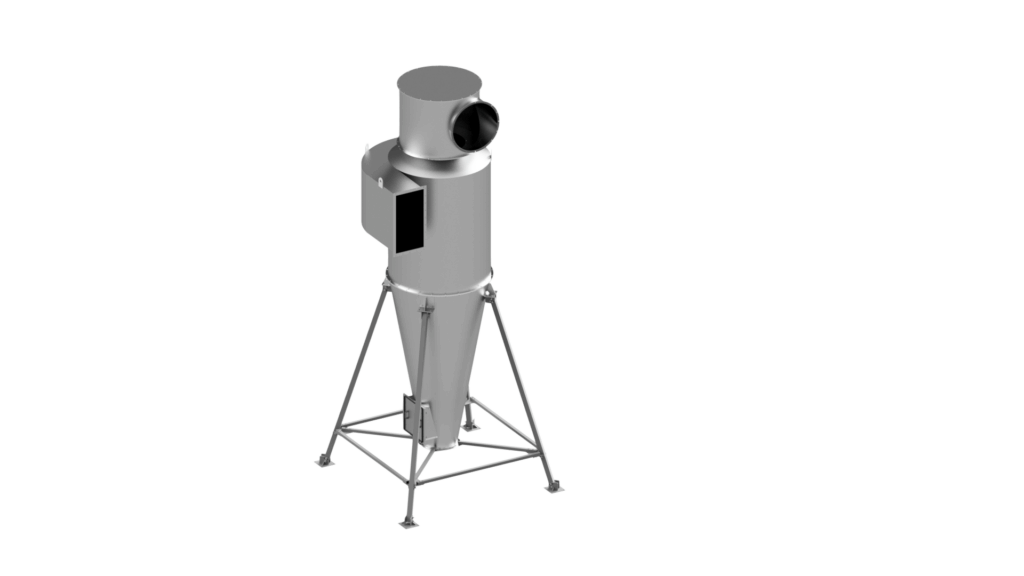
Contact UsHorizontal and Vertical Cyclones NAWARA cyclones are designed for separating dust and solid particles from air by means of centrifugal force. Vertical cyclones are installed above silos and storage tanks, ensuring efficient material separation. Horizontal cyclones are used in installations with limited space, particularly in pneumatic conveying systems. Manufactured from galvanized or stainless steel, they can be equipped with ATEX-compliant rotary valves. Rotary Valve A rotary airlock installed below a cyclone or filter provides continuous discharge of collected material without interrupting operation or causing a loss of negative pressure. NAWARA supplies airlocks for conveying sawdust, dust, and other bulk materials between system components such as filters and silos. Units are manufactured from wear-resistant materials and are available both as new equipment and as refurbishment solutions for existing installations. ATEX-compliant versions are also available. Redler Chain Conveyors Designed for biomass and wood industry waste handling. The operating principle is based on horizontal transport of loose bulk materials, including fine particles and larger pieces, using drag flights. The conveyor structure is manufactured entirely from high-quality galvanized steel. Screw Conveyors Used for transporting wood waste horizontally or at a slight incline. The system consists of a steel trough or tubular housing containing a screw shaft driven by a geared motor. This solution is suitable for wet materials or materials with high bulk density where pneumatic transport would be uneconomical. Bucket Elevators Designed for vertical transport of bulk materials such as grain, sugar, aggregates, and other bulk products. They are used for filling silos, storage tanks, and hoppers. Their design ensures smooth and safe material handling while minimizing material loss and dust generation. The systems can be customized according to required capacity and lifting height. Belt Conveyors Reliable systems for transporting fine materials and products across various industries. They feature a robust construction with an aluminium frame, a belt supported by stainless steel components, and a drive system ensuring smooth operation. Their adaptable design improves production efficiency. Container Loading Systems Comprehensive systems for fast and safe loading of loose or packaged materials into transport containers. They consist of steel structures, belt conveyors, or loading chutes guiding the material directly into the container. Additional elements such as service platforms, ladders, and auxiliary equipment support operation and maintenance.
Dust extraction systems and pneumatic conveying systems use the same fan and the same duct network. Designing them independently through separate suppliers often leads to conflicts in pressure losses, mismatched system capacities, and operational interference. NAWARA designs the entire installation as a single integrated system with one pressure-loss calculation and one control point.
Does a cyclone replace a bag filter?
No. A vertical or horizontal cyclone separates coarse fractions but allows fine dust particles to pass through, which still require filtration by a bag filter or another filtration system. A cyclone extends the service life of a bag filter by removing the majority of the material load, but it does not replace the filter’s role in cleaning air discharged into the atmosphere.
When should a screw conveyor be used instead of pneumatic conveying?
A screw conveyor is the preferred solution wherever the material is wet, heavy, or sticky. In such conditions, pneumatic conveying would require disproportionately high power consumption and would be more susceptible to blockages. Typical applications include bark, wet wood chips, and high-density wood waste.
How can blockages in a pneumatic conveying system be prevented?
The key factors are maintaining the correct conveying velocity, minimizing the number of bends (and using sufficiently large bend radii where bends are necessary), selecting appropriate pipe diameters, and performing regular inspections of critical points. NAWARA designs duct networks with inspection access points at key locations and can equip systems with pressure sensors that indicate increasing resistance within the network.
Can rotary airlocks operate in potentially explosive atmospheres?
Yes. NAWARA rotary airlocks can be manufactured in accordance with the requirements of the ATEX Directive, allowing their use in facilities processing combustible and dust-generating materials such as sawdust or wood flour.