

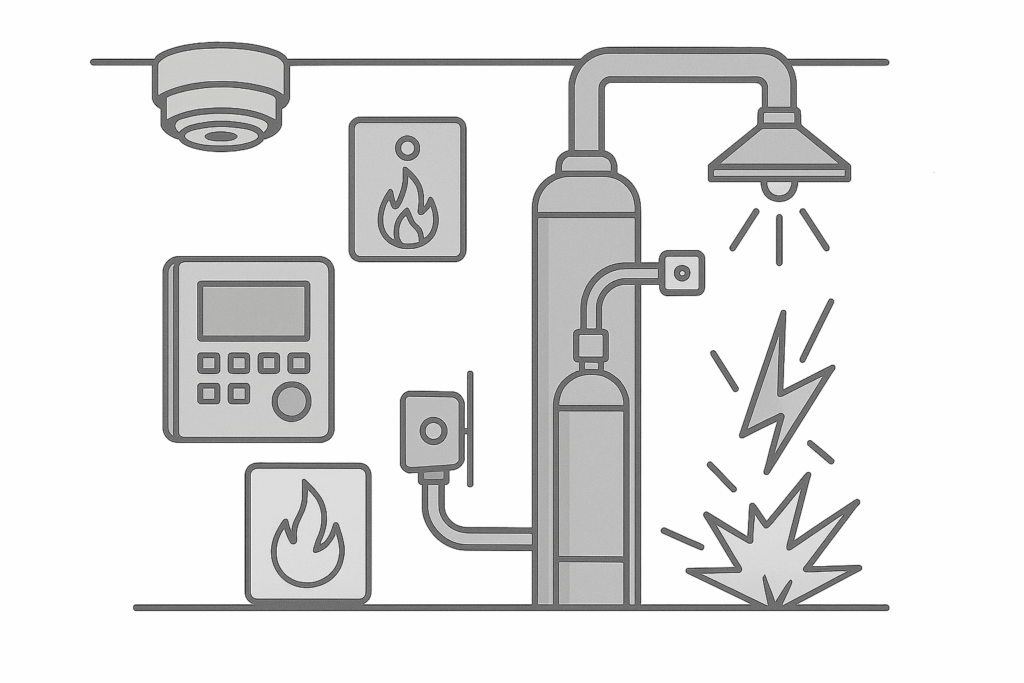
A dust extraction system is one of the most underestimated pathways for fire propagation within industrial facilities. A spark generated by a saw or milling machine, travelling through the duct network at a velocity of 20 m/s, can reach a filter unit or silo within seconds. Without fire detection and suppression systems, a fire develops inside an enclosed space, under negative pressure conditions, with unlimited access to combustible material. Within minutes, an entire facility can be engulfed in flames.
NAWARA fire protection systems, including backdraft dampers, spark extinguishing systems, detectors, and control systems, are designed as an integral part of every extraction system rather than as an upgrade installed after an incident.
During a fire event, an extraction system acts similarly to a blower. The fan supplies oxygen to the fire and spreads it throughout the duct network. Backdraft dampers interrupt this mechanism by shutting off airflow when an increase in temperature or the presence of flame is detected, isolating individual sections of the system.
Wood and metal dust transported within ductwork constitute combustible material. Mechanical sparks originating from cutting tools or thermal sparks created by overheated bearings are sufficient to initiate ignition. Spark extinguishing systems detect infrared (IR) or ultraviolet (UV) radiation from sparks within the duct and activate a water mist or CO₂ suppression system within 50–100 ms, before the spark reaches the filter unit.
Fires in extraction systems operating in woodworking and metalworking facilities cause dozens of major incidents each year. Insurance companies increasingly require documented compliance with GS-HO 14 or equivalent standards as a condition for insuring production facilities. The absence of fire protection systems not only increases fire risk but may also affect the eligibility for insurance compensation.
NAWARA backdraft dampers for extraction systems are equipped with:
A spark suppression system consists of a detector (IR or UV sensor installed in the duct), a controller, and extinguishing nozzles. Operating parameters:
Bag filters and biomass silos are particularly vulnerable locations for fire initiation. NAWARA uses temperature probes, smoke detectors, and CO sensors as early warning systems. A smouldering fire inside a silo generates carbon monoxide long before visible flames appear.
NAWARA systems can be equipped with interlocking functionality that automatically shuts down fans and production machinery when a hazard is detected. This prevents oxygen from being supplied to the fire and increases the effectiveness of suppression systems.
We will select a solution tailored to the system's specifications, operating conditions, and technical requirements.
Contact UsThe GS-HO 14 standard, together with related VdS guidelines, defines requirements for extraction systems processing combustible materials, including the scope of protection, extinguishing equipment types, ductwork design requirements, and documentation. NAWARA designs systems in accordance with these requirements and provides complete safety documentation.
The ATEX Directive regulates the safety of equipment operating in explosive atmospheres but does not replace fire protection requirements. Both sets of regulations apply simultaneously and must be fulfilled together. NAWARA designs systems compliant with both ATEX and fire protection requirements without requiring separate suppliers.
Backdraft dampers and spark extinguishing systems require regular inspections, including detector calibration, actuator testing, and verification of extinguishing agent pressure. NAWARA offers maintenance contracts covering annual inspections with reports suitable for presentation to insurers or occupational safety authorities.
Is a backdraft damper required in every dust extraction system?
Regulations do not require backdraft dampers in every extraction installation. However, the GS-HO 14 standard and insurance company requirements effectively make them necessary in systems that handle combustible materials. In ATEX installations, backdraft dampers form part of the explosion protection documentation and are, in practice, considered essential.
How often should a spark extinguishing system be serviced?
Manufacturers recommend an annual inspection, including detector calibration and verification of water or CO₂ pressure. NAWARA offers maintenance contracts that include an inspection report suitable for presentation during occupational safety inspections or insurance audits. Failure to perform regular maintenance may result in the loss of equipment certification.
Must the extinguishing system stop the extraction installation when a spark is detected?
No. In most systems, activation of the spark extinguishing process does not require the fan to be stopped. The extinguishing nozzle suppresses the spark inside the duct while the system continues operating. Fan and machine shutdown (interlocking) is typically activated only when an actual fire is detected, such as a temperature increase inside a filter unit or silo. NAWARA programs the control logic individually for each installation.